Importance Of Language Development For 2 Year Olds
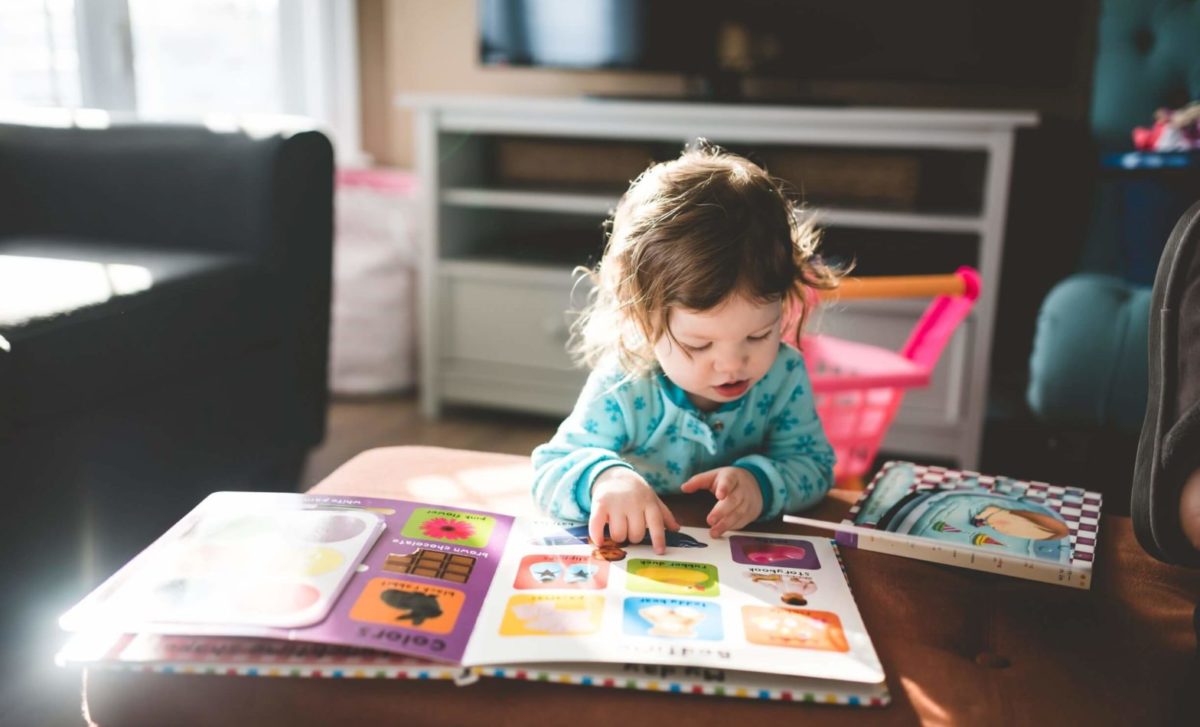
When children start to use their first words, they usually say the names of people and objects (nouns), then by two years of age, they will also start using action words (verbs). Studies have shown that two-year-old children who use more verbs have more advanced grammatical skills six months later. Verbs are an important part of language development because they allow children to start combining words and forming phrases and sentences.
First Words – How many words should a 2 year old say?
At two years of age, toddlers should typically have about 50 different verbs in their vocabulary. Whereas a limited verb vocabulary (indicating risk of language impairment) would be about four verbs.
How many verbs should my toddler be gaining?
Typically, toddlers gain about eight new verbs each month (which gradually slows down over time). Sometimes, toddlers who have only a few verbs just prior to 24 months, suddenly gain new verbs very quickly, gaining up to 14 verbs per month and catching up to their peers. Other times, toddlers with limited verbs at 24 months continue to gain new verbs slowly which may be cause for concern, highlighting a risk of language impairment.
How can you help increase your toddler’s verb vocabulary?
Try to model verbs for your toddler in a meaningful way. For example, you can say the name of an action you are performing while acting the action out. You may be playing with playdough and a rolling pin and you could say ‘rolling-rolling-rolling’ while completing the action. Also talk about the things your child likes to do. If your toddler likes playing with a ball you can repeat the action words ‘kick’, ‘catch’, ‘throw’, ‘roll’ and ‘go’. Don’t forget to repeat verbs in many different situations as children need to hear new words many times before they start using them.
For more great reading see:
Child Developmental Milestones: A Checklist for Babies & Toddlers
Music and Childhood Development
Raising A Child With More Than One Language
Only About Children can help your child to grow, make friends and explore the world.
Only About Children can help your child to grow, make friends and explore the world.
Related Reads
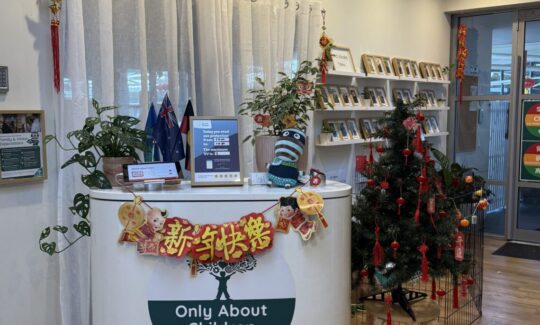
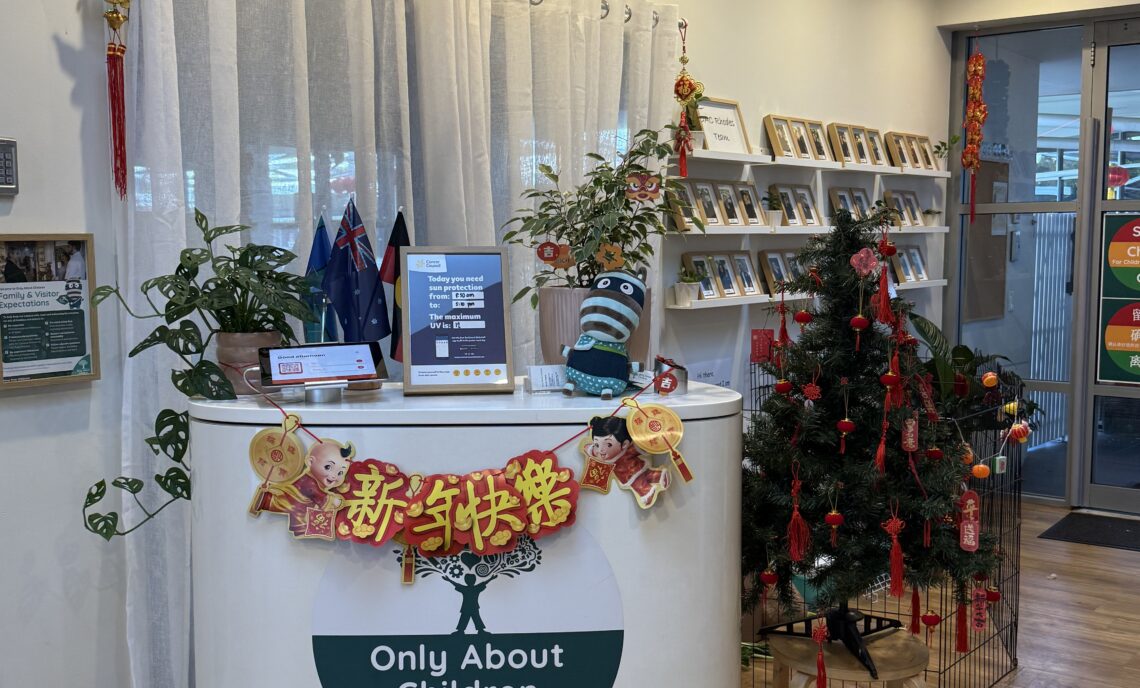
A Spectacular Lunar New Year Celebration at OAC Rhodes
OAC Rhodes welcomed Lunar New Year with a vibrant community celebration featuring a lion dance, dumpling making, lantern crafts and a wishing tree. It was a joyful day of culture, creativity and connection for children and families.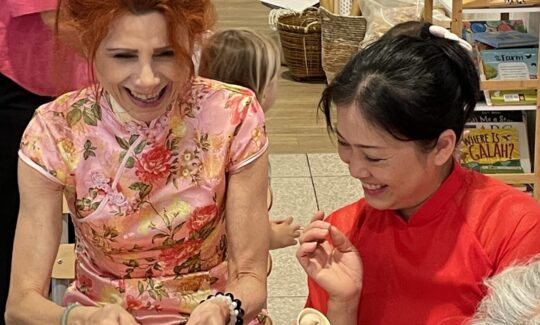
Celebrating Community and Culture at OAC Elsternwick
At OAC Elsternwick, children and families come together to celebrate cultural and community events. From decorating and making dumplings to sharing traditional foods, every celebration is a chance to learn, connect and have fun.